Greater efficiency, control and operational continuity for warehouses, buildings and facilities.
Safety & Security
Manage the entire emergency lifecycle, protect people and critical assets, and ensure operational continuity.
Reliability and control to build a secure and resilient IT environment.
Turn data into strategic decisions and measurable business outcomes.
Business Digitalization & Automation
Digitize and automate business processes to boost productivity, efficiency and agility.
-
Warehouse Management
More efficient, integrated and controlled warehouses, from workflow management to automation.
-
Building Management
Safer, more connected and efficient buildings and facilities through centralized monitoring and control.
-
Public Safety & Emergency Services
Turn every emergency call into an effective response, coordinating people, information and resources to deliver help where and when it is needed.
-
Critical Infrastructure Security
Safer critical infrastructure through centralized security monitoring, integrated event management and coordinated incident response.
-
Observability
End-to-end visibility into IT systems to anticipate anomalies and reduce resolution times.
-
Service Orchestration
Automated and orchestrated IT processes and services to ensure efficiency and business continuity.
-
IT Service Management
Improve IT service quality and user experience, from request management to problem resolution.
-
IT Governance
Greater control over IT investments, risks and performance for better-informed decisions.
-
Managed Services
Continuously monitored and managed IT systems to ensure service reliability and availability.
-
Cybersecurity
Protect data, systems and infrastructure to reduce risks and strengthen digital resilience.
-
Data Value
Unlock the value of enterprise data with reliable, accessible, AI-ready information.
-
Intelligent Business Process Automation
End-to-end process automation using AI and RPA to reduce manual tasks, processing times and errors.
-
Software Development
Custom software, integrated applications and modernized systems tailored to business needs.
About Us
The history, values, people and expertise that make Beta 80 what it is today.
Life at Beta 80
People, learning and company life: discover what it means to work at Beta 80.
Beta 80 and Young People
Schools, universities and training pathways that help young people enter the world of work.
Careers
Open positions and career opportunities to become part of Beta 80.
-
Vision & Mission
Our identity, what drives us every day and the goals we strive to achieve.
-
Our Values
Exceed IT: curiosity, collaboration and the drive to push beyond our limits every day.
-
Fondazione Beta 80
Preserving company values and ensuring long-term continuity, stability and social impact.
-
Our Business
40 years of experience, specialist expertise and solutions for digital transformation.
-
Leadership
The people leading Beta 80, sharing its vision, responsibilities and goals.
-
Training
Continuous learning, knowledge sharing and skills development to grow together.
-
Workspaces
Flexible, collaborative environments designed to foster well-being, connections and new ways of working.
-
Events
Meetings, initiatives and opportunities to share experiences, knowledge and company life.
-
Alumni - BetAgain
A community to keep connections alive, share expertise and create new opportunities.
-
Beta 80 and Local Schools
Workshops, career guidance and company-based learning to bring students closer to the world of work.
-
The “Carlo Acutis” Technical Technological Institute
An educational project combining technology and humanities, schools and businesses.
-
Participation in ITS and IFTS Foundations
Technical training, career guidance and internships to develop skills companies need.
-
The partnership with Universities
Partnerships with universities offering internships, industry insights and opportunities for growth.
-
Academies
Job-oriented training programs to develop technical and professional skills.
-
Work with Us
Explore open positions and opportunities to build your career at Beta 80.
Public Safety & Emergency Services

Managing the entire Emergency Lifecycle takes the right technology
A request for help rarely arrives with all the information needed to act. It may begin with an uncertain address, an interrupted conversation, a silent call or dozens of reports about the same incident. From incomplete information, the control centre has only moments to build a reliable picture:
-
understand what is happening
-
assign a priority
-
keep everyone involved aligned until the response is complete.
This is the responsibility that technology must support. Not simply answering a call, but ensuring continuity throughout the response: from communication to the incident record, from location to dispatch, and from the control room to teams in the field. Without losing information, without having to reconstruct events outside the system, and with every step traceable.
We develop technologies that help Emergency Control Centres, Healthcare Services and Civil Protection organisations turn every request for help into a coordinated, timely and informed response. Because responding to an emergency means enabling people, information and resources to work together.
Explore our Case Studies and White Papers
-
Case study

Hrvatski Autoklub: RTT transforms roadside assistance
HAK, Croatia’s national motoring association, chose Beta 80 to implement Real-Time Text (RTT) technology. The goal? Faster, more accessible roadside assistance.
-
Handbook

Integrating AI into PSAPs: A Practical Guide
Discover how AI can improve emergency call handling, dispatch, and triage through real-world use cases, practical benefits, and implementation challenges. -
White Paper

116 117: what it is, what it does and why it matters for public safety
Explore the strategic role of the harmonised European number 116117 in handling non-urgent healthcare requests, providing out-of-hours care and integrating with emergency medical services.
-
Case Study

North Macedonia: Europe's First NG112 System
Discover how we modernized emergency call management in North Macedonia by implementing a next-generation national 112 system.

From the call for help to incident closure: how to ensure continuity throughout the Emergency Response
Receive the request and establish its location. Assess the incident and assign a priority. Apply the response plan, identify the resources actually available and dispatch them. Track their movements, share updates between the control room and field teams, and coordinate the agencies involved. Finally, close the incident, retain its record and make every action auditable.
These are distinct steps, but they belong to the same process. The quality of the response depends on how effectively information and responsibilities are passed along the entire operational chain.
When telephony, CAD, GIS, radio and mobile applications do not communicate, the operator has to piece the picture together. Information must be re-entered, checks multiply and updates travel through channels that are not linked to the incident record. At peak times, apparently manageable fragmentation can become an operational risk.
An emergency management software platform must therefore do more than store a record. It must keep the incident active:
-
present information in context;
-
support the application of procedures;
-
support dispatch;
-
retain a complete history of the response.
We step in where Emergency Management becomes more complex
Pressure on an emergency control centre cannot be measured by call volumes alone. It grows when the situation is still unclear, information is changing rapidly and decisions must be made before the full picture is available. The ability to manage an emergency is tested in the gap between what is known and what demands an immediate response.
Accurate caller location starts with multiple data sources
The caller may not know the exact address, may be moving or may lose the connection before describing where the emergency is taking place. The control centre must correlate coordinates transmitted through AML, the eCall Minimum Set of Data, location data supplied by the mobile network and information gathered during the call. For every data item, its source, estimated accuracy, timestamp and any subsequent change in position must be immediately apparent.
The GIS must do more than show where the caller is: it must help the operator assess the reliability of the available information. The location must be understood in context: jurisdiction, road network and access points, street numbers and local landmarks, obstacles, risk areas, incidents already in progress and resource locations. Correlating these elements turns a geographical data point into a location that can guide the response.
Seamless call routing, continuous incident history
When a call is transferred from a first-level 112 PSAP to a second-level PSAP (emergency medical services, police or fire and rescue), or from one agency to another, voice and data must travel together. If the incident record is incomplete, the caller has to repeat information already provided, while operators have to reconstruct the context through manual transcription and checks. The same continuity must extend to the response in the field: messages, images and video must feed into a single incident record, preserving the history from the initial alert to closure.
The aim is to move progressively from alert to insight and from insight to action, while retaining human involvement in processes and decisions where risk, context and impact require it: the human-in-the-loop approach.
Discover how Beta 80 technologies support PSAPs every day, in Italy and beyond.
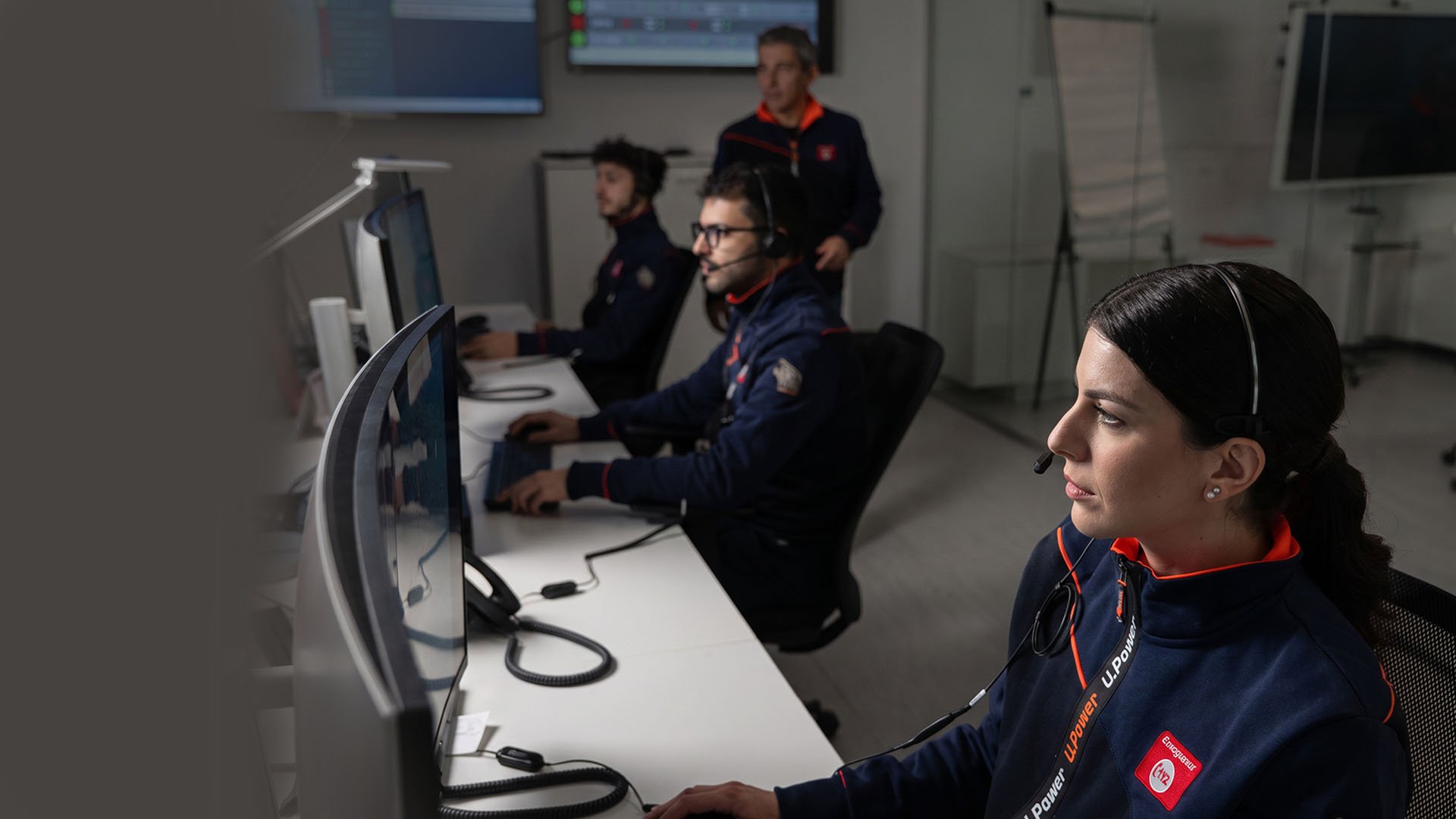
More than 130 control centres served worldwide and an established presence in Italy’s 112 emergency number system tell a story of technology, expertise and responsibility.
A story that takes shape every day alongside those who keep people safe, respond to emergencies and coordinate rescue operations.
From first-level 112 PSAPs to second-level control centres for Emergency Medical Services (EMS), Police and Fire and Rescue, through to 116117 non-emergency healthcare services and Civil Protection operations centres.
High call volumes, clear priorities
A major emergency can generate multiple reports at the same time as unrelated requests continue to arrive. The control room manager must be able to link duplicate calls to the same incident, retain every new piece of information and monitor changing queues without losing sight of priorities.
In these situations, average response time alone cannot describe service quality. What matters is keeping the critical incident in view, giving operators a shared picture and immediately recognising any deterioration in response capacity.
Smart dispatch goes beyond proximity
Geographical proximity is only one dispatch criterion. The decision must take account of actual resource availability, operational status, crew skills, equipment, coverage area, arrival times, local constraints and the nature of the incident.
If unit locations and status are out of date, the control centre is making decisions based on a picture that no longer reflects reality. The resulting radio or telephone checks delay mobilisation and can leave important information outside the auditable record of the response.
From the PSAP to the field: one shared operational picture, one coordinated response
The control centre and field units must work from the same situational picture, updated in real time. Changes in the situation, resource status, coordinates, operational instructions, messages and multimedia content must feed into the same incident record and be immediately available to everyone involved.
This ensures that information gathered in the field updates the control room’s picture and that every decision made by the centre reaches crews without delay.
Enrich voice calls with new communication channels
With Next Generation 112 (NG112), emergency communications extend beyond voice to include Real-Time Text, video and multimedia content. The challenge is not to add more channels or windows to the operator’s workstation, but to make them part of the same process.
Text, images and video must remain linked to the call, its location, the recording and the incident record. Only then do they become part of the operational picture and provide practical support for the emergency response.
Discover Beta 80's Public Safety Software Solutions, supporting every stage of Emergency Response
What new European regulations mean for PSAPs
New European provisions affect how people access emergency services and how control centres receive, manage and share requests for help. Accessibility, interoperability, security and service continuity are becoming essential requirements for a coordinated, inclusive and reliable response.
-
More inclusive access to Emergency Services (si apre in una nuova scheda)
The Digital Networks Act supports the shift towards emergency communications that remain accessible when voice is not the most suitable channel or cannot be used. Real-Time Text (RTT), video, images and location data will enable people to contact emergency numbers, including not only those who are deaf, hard of hearing or have speech disabilities, but also anyone unable to speak because of the incident or their circumstances.
• For PSAPs, this means integrating new channels into the call-handling process, ensuring that every piece of information remains linked to the incident and can be forwarded to the appropriate emergency services without interrupting communication.
• For the citizen, it means being able to access help in ways better suited to their needs and circumstances.
-
Ensuring Cybersecurity and uninterrupted Emergency Services (si apre in una nuova scheda)
With the transposition of the NIS2 Directive through Italian Legislative Decree No. 138/2024, digital resilience takes on an even greater role for organisations providing essential services.
• For PSAPs, protecting systems and information is not enough: they must prevent and manage incidents, control access, oversee the supply chain and ensure operational continuity.
• For the citizen, this translates into reliable emergency services even in the event of failures, cyberattacks or exceptional circumstances.
-
Artificial Intelligence in Emergency Management: opportunities and new responsibilities (si apre in una nuova scheda)
Artificial Intelligence will also transform Public Safety, delivering tangible benefits in call handling and information analysis, as well as decision support. This evolution brings new responsibilities. The AI Act classifies systems used to assess or classify emergency calls and prioritise the dispatch of emergency response resources as high-risk.
For PSAPs, this means adopting rules and processes that ensure data quality, traceability, risk management and human oversight, while keeping situational assessment and responsibility for decisions under the operator’s control.
40 years by the side of those who protect and save lives
For forty years, Beta 80 has developed public safety technologies by listening to the people who deal with emergencies every day. Ongoing dialogue with operators, control room managers, responders and institutions turns field experience into solutions that address real needs. Participation in international forums such as EENA, the European Emergency Number Association, also drives this work, helping anticipate changes in standards, regulations and operating models.
At Beta 80, innovation is born from the perfect combination of technological expertise and a deep understanding of Emergency Response.
-
13 Countries
-
101 Million People Served
-

132 PSAPs
-
40 Million Calls Handled
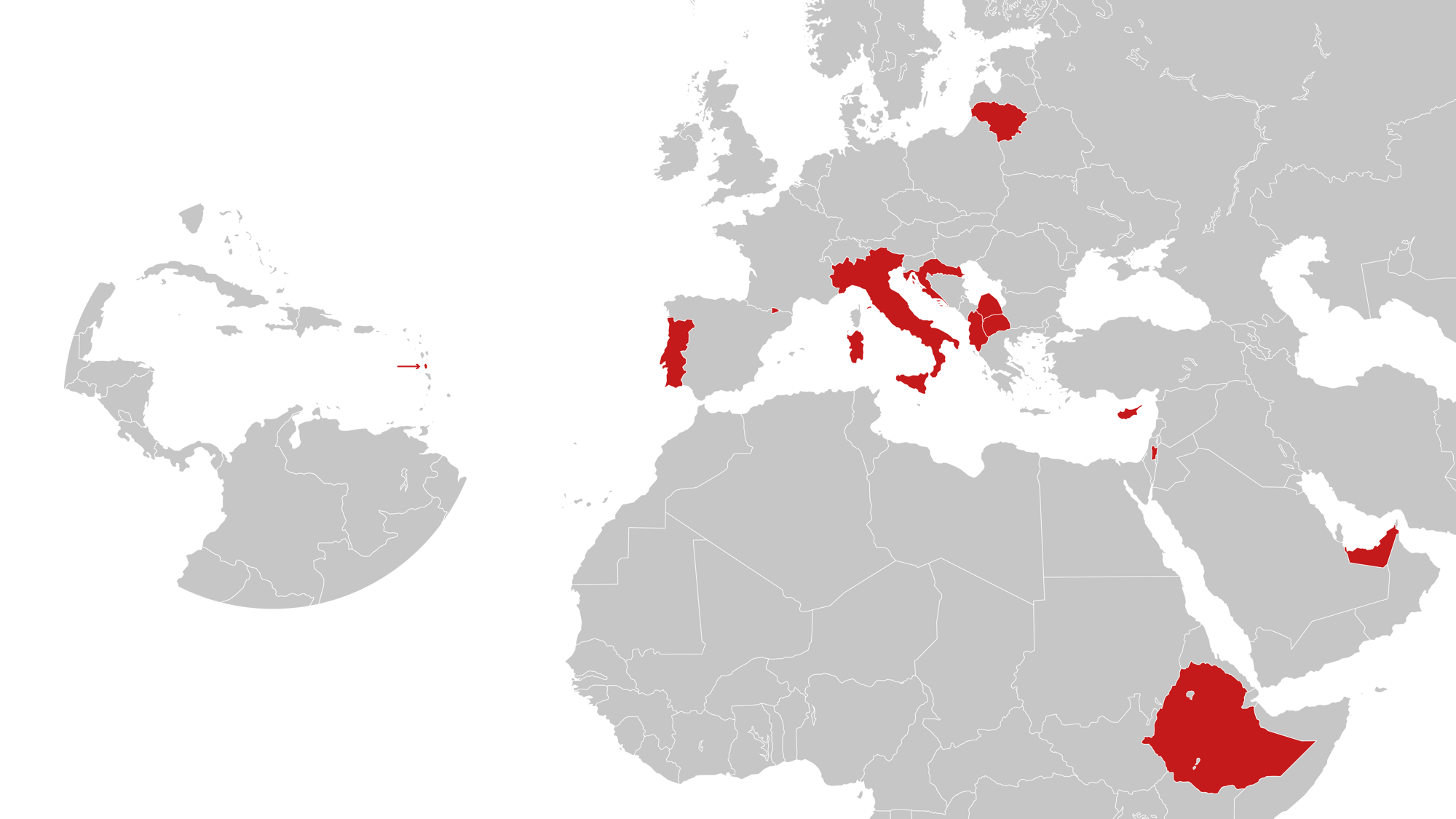
Working everywhere for a safer world
ITALY | CROATIA | KOSOVO | ALBANIA | MACEDONIA | PORTUGAL | LITHUANIA | CYPRUS | PALESTINE | UAE | ETHIOPIA | DOMINICA | ANDORRA

What sets Beta 80 apart in Public Safety
-

Tailored technologies for those managing emergencies
Civil Protection, out-of-hours healthcare and emergency services have different operational needs. Beta 80 develops solutions tailored to each organisation.
That is why Beta 80 develops solutions specific to each organisation, designed around its operational context and built to provide practical support for its work.
-

Innovating for the future of emergency response
Beta 80 works every day to improve its solutions and adapt them to evolving technologies and regulations.
The integration of artificial intelligence into its software platforms and the development of a Real-Time Text solution are concrete examples of this ongoing commitment.
-

Italian market leadership with an increasingly international reach
The leadership established in Italy is the foundation for an increasingly international presence.
Through partnerships, European projects and collaboration with organisations such as EENA, Beta 80 takes its expertise beyond national borders.
Emergency services, Civil Protection and out-of-hours healthcare operate in different contexts, with their own workflows, responsibilities and tools. Beta 80 has developed dedicated technologies for each area, united by one principle: keeping information, procedures and stakeholders within a coherent operational framework and a clear, seamless flow of information.
Life 1st: the all-in-one solution for Emergency Management
Life 1st brings together the technologies needed to manage an emergency in a single suite, from receiving the call to coordinating the response in the field.
At the heart of the suite is CAD (Computer Aided Dispatch), the operational core that collects and organises information, supports the operator in managing the incident and helps dispatch the most appropriate resources. Complementary technologies integrate around the CAD:
• AML and eCall provide precise caller and vehicle location data;
• the GIS provides an up-to-date geographical view of incidents and resources;
• Analytics tools enable the centre’s activity and performance to be monitored.
Used by 112/911 PSAPs, Police, Fire and Rescue Services, Emergency Medical Services (EMS) and the Coast Guard, Life 1st is already operational in 132 PSAPs across 12 countries.
NG112: from the Emergency Voice Call to Multichannel Emergency Communications
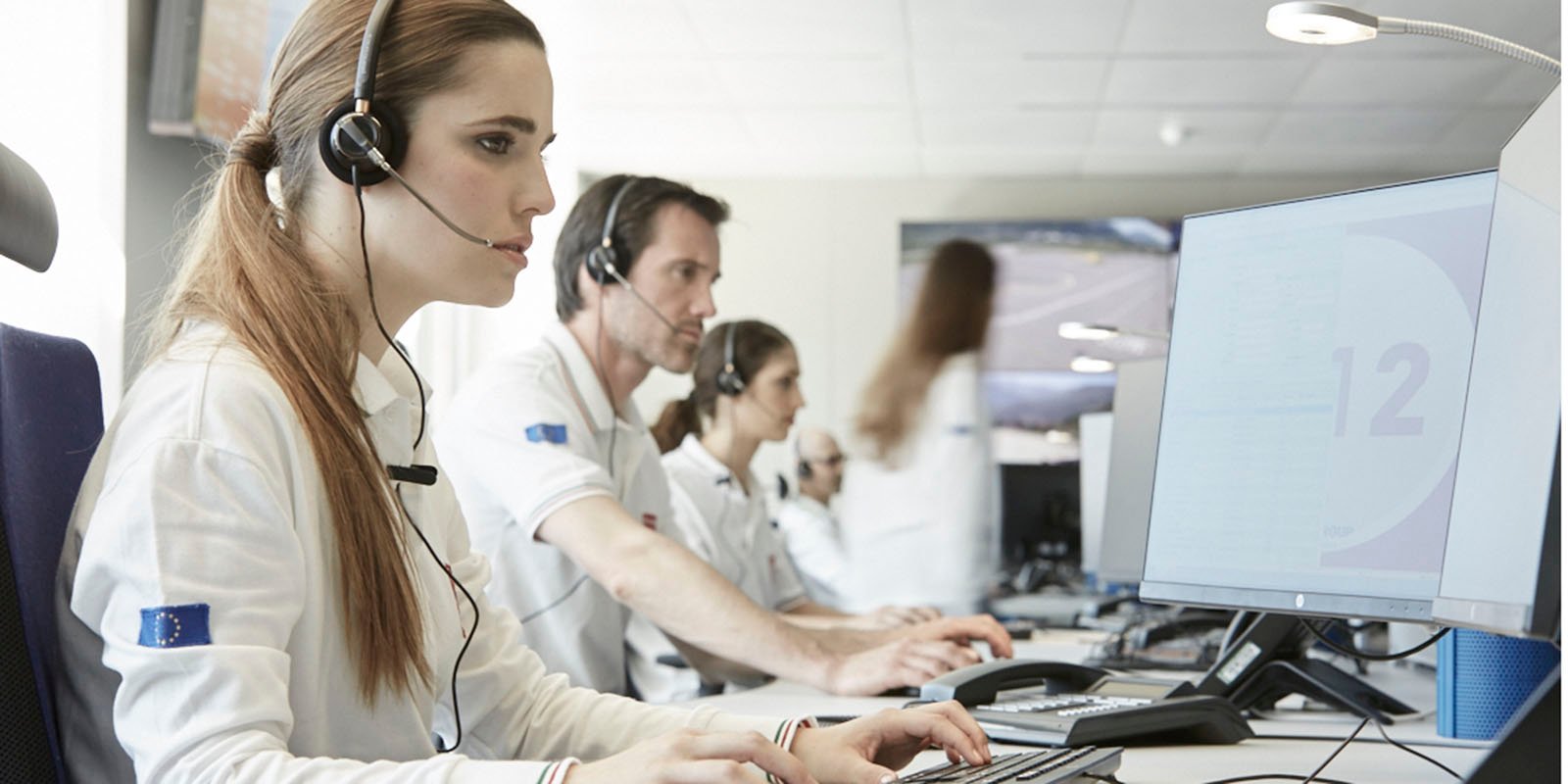
Next Generation 112 transforms the emergency call into multichannel communication, integrating voice, text, video, images and location data. Beta 80 supports this evolution with two solutions, available as standalone deployments or integrated with Life 1st CAD and third-party CAD platforms already in use at the centre.
• DinamiCall enables video calls, chat and multimedia sharing through a link sent to the caller’s device, without requiring a dedicated application to be installed.
• Real-Time Text (RTT) enables two-way text transmission in real time, character by character, ensuring continuous communication and greater accessibility for people with hearing or speech disabilities, as well as anyone unable to communicate by voice because of temporary conditions or circumstances related to the emergency.
Together, these technologies bring the Total Conversation approach into daily operations, helping centres understand the situation more clearly, gather more complete information and offer everyone the most suitable channel for requesting help.

Help 1st: the integrated suite for 116 117 Services and Scheduled Medical Transport
Help 1st is the suite designed for 116 117 control centres and the coordination of scheduled patient transport.
For out-of-hours healthcare services, it collects and manages requests from the public through a single point of access, connecting community healthcare, emergency medical services and hospitals.
For patient transport management, it helps plan each transfer based on the patient’s condition, staffing needs, equipment, vehicle availability and route. The solution can integrate with 118 or 112 and can be used directly by healthcare facilities or by organisations responsible for providing the service.

Safety 1st: the all-in-one platform for Civil Protection
Safety 1st brings together the tools Civil Protection operations centres need to prepare for major emergencies and coordinate the response.
Outside emergencies, it enables resources and procedures to be updated, the territory to be monitored, and staff and volunteers to be organised. When a critical incident occurs, it provides a shared operational picture to track how the situation develops, coordinate activities and keep the operations centre, field teams and the public connected.
Its modular structure and availability on-premises or as SaaS allow the platform to be configured to meet each organisation’s needs.
News
News, insights and new technologies for public safety professionals
-
ArticleNew EU rules for Emergency Communications: what the Digital Networks Act means for 112 services
Digital Networks Act and 112: what changes for PSAPs and emergency communications, including NG112, data sharing, accessibility, interoperability and resilience.
-

ArticleReal-Time Text: more than accessibility for Emergency Services
Real-Time Text enables advanced Emergency Services capabilities, including real-time texting, live translation, and multimedia communication. Here’s how it can improve emergency response operations.
-
ArticleIntegrating electronic health records into CAD: why it makes the difference
Incomplete data and delays in emergency response can cost lives: here’s how integrating CAD and electronic health records is transforming control rooms.
-
ArticleHow AI can improve PSAP operator training for Emergency Call Handling
Training operators in the Operations Centre is key to ensuring optimal service, and AI offers unprecedented contributions to raising operational standards. Here's how.
What solutions does Beta 80 offer for emergency management?
Beta 80 develops dedicated solutions for different areas of public safety:
-
Life 1st for first- and second-level emergency control centres (112, police, fire and rescue, and emergency medical services)
-
Safety 1st for Civil Protection
-
Help 1st for 116 117 PSAPs and scheduled patient transport.
What is CAD and what role does it play in a control centre?
CAD, Computer Aided Dispatch, is the operational core of emergency management. It collects and organises information, supports incident assessment and prioritisation, applies response plans and facilitates the dispatch of the most appropriate resources. It also enables the response to be monitored and a complete, traceable history to be retained.
How does Beta 80 support the transition to NG112?
Beta 80 supports control centres in introducing communications that go beyond voice calls. DinamiCall enables video, chat and multimedia sharing; the Real-Time Text solution enables two-way, real-time text exchange, character by character. Both solutions can be deployed independently or integrated with Life 1st CAD or third-party CAD systems already in operation.
How is artificial intelligence used in Beta 80 solutions?
Artificial intelligence is integrated into Beta 80 platforms to help control centre operators transcribe calls, translate between languages and analyse images and video. AI virtual agents also support operators in their daily work and in training and operational scenario simulations. Situational assessment and responsibility for decisions always remain under human control.
Are the platforms available in the cloud or on-premises?
Deployment models are defined according to organisational, technological and security requirements. The solutions can be deployed on-premises or, where available, delivered in the cloud or as SaaS, while preserving interoperability, operational continuity and control of data.