Greater efficiency, control and operational continuity for warehouses, buildings and facilities.
Safety & Security
Manage the entire emergency lifecycle, protect people and critical assets, and ensure operational continuity.
Reliability and control to build a secure and resilient IT environment.
Turn data into strategic decisions and measurable business outcomes.
Business Digitalization & Automation
Digitize and automate business processes to boost productivity, efficiency and agility.
-
Warehouse Management
More efficient, integrated and controlled warehouses, from workflow management to automation.
-
Building Management
Safer, more connected and efficient buildings and facilities through centralized monitoring and control.
-
Public Safety & Emergency Services
Turn every emergency call into an effective response, coordinating people, information and resources to deliver help where and when it is needed.
-
Critical Infrastructure Security
Safer critical infrastructure through centralized security monitoring, integrated event management and coordinated incident response.
-
Observability
End-to-end visibility into IT systems to anticipate anomalies and reduce resolution times.
-
Service Orchestration
Automated and orchestrated IT processes and services to ensure efficiency and business continuity.
-
IT Service Management
Improve IT service quality and user experience, from request management to problem resolution.
-
IT Governance
Greater control over IT investments, risks and performance for better-informed decisions.
-
Managed Services
Continuously monitored and managed IT systems to ensure service reliability and availability.
-
Cybersecurity
Protect data, systems and infrastructure to reduce risks and strengthen digital resilience.
-
Data Value
Unlock the value of enterprise data with reliable, accessible, AI-ready information.
-
Intelligent Business Process Automation
End-to-end process automation using AI and RPA to reduce manual tasks, processing times and errors.
-
Software Development
Custom software, integrated applications and modernized systems tailored to business needs.
About Us
The history, values, people and expertise that make Beta 80 what it is today.
Life at Beta 80
People, learning and company life: discover what it means to work at Beta 80.
Beta 80 and Young People
Schools, universities and training pathways that help young people enter the world of work.
Careers
Open positions and career opportunities to become part of Beta 80.
-
Vision & Mission
Our identity, what drives us every day and the goals we strive to achieve.
-
Our Values
Exceed IT: curiosity, collaboration and the drive to push beyond our limits every day.
-
Fondazione Beta 80
Preserving company values and ensuring long-term continuity, stability and social impact.
-
Our Business
40 years of experience, specialist expertise and solutions for digital transformation.
-
Leadership
The people leading Beta 80, sharing its vision, responsibilities and goals.
-
Training
Continuous learning, knowledge sharing and skills development to grow together.
-
Workspaces
Flexible, collaborative environments designed to foster well-being, connections and new ways of working.
-
Events
Meetings, initiatives and opportunities to share experiences, knowledge and company life.
-
Alumni - BetAgain
A community to keep connections alive, share expertise and create new opportunities.
-
Beta 80 and Local Schools
Workshops, career guidance and company-based learning to bring students closer to the world of work.
-
The “Carlo Acutis” Technical Technological Institute
An educational project combining technology and humanities, schools and businesses.
-
Participation in ITS and IFTS Foundations
Technical training, career guidance and internships to develop skills companies need.
-
The partnership with Universities
Partnerships with universities offering internships, industry insights and opportunities for growth.
-
Academies
Job-oriented training programs to develop technical and professional skills.
-
Work with Us
Explore open positions and opportunities to build your career at Beta 80.

Warehouse Management: how to choose the right system for your warehouse
Warehouse efficiency increasingly depends on the ability to manage processes, data and technologies as a single system. The number of available automation and digitalization solutions is growing, but value does not come from individual technologies. It comes from the ability to integrate them into processes and enable WMS, ERP, operators and automated systems to work together.
This direction is also confirmed by the Contract Logistics “Gino Marchet” Observatory of Politecnico di Milano, which identifies the integration of information systems and technologies and the transformation of processes as two key elements for generating value from logistics digitalization.
In this scenario, a Warehouse Management System (WMS) makes it possible to digitalize and orchestrate operational processes, keep the physical flow of goods aligned with information flows and connect the warehouse with ERP, corporate systems and automation technologies.
How do you choose the most suitable WMS? Comparing software features is not enough. The assessment should start with the processes that need improvement, the existing level of automation, the integrations required and the objectives to be achieved: reducing picking errors, increasing inventory accuracy, speeding up order fulfillment or coordinating manual, automated and hybrid environments.
A more efficient, accurate and connected warehouse
Effective Warehouse Management makes it possible to manage the warehouse using reliable, up-to-date information, maintaining control over operations even as volumes, product ranges and complexity increase.
Processes, people, WMS, corporate systems and automation work in a coordinated way, making the warehouse more accurate, visible and responsive. This delivers tangible results: greater order and inventory accuracy, faster fulfillment times, better stock visibility and greater ability to adapt to fluctuations in demand.
These results are reflected in the warehouse's key performance areas, from operational accuracy to the ability to manage different volumes, systems and levels of automation.
Reduce errors and increase order accuracy
Picking and order preparation are activities in which an error can propagate throughout the entire logistics process.
Digitalizing operations makes it possible to guide operators through the different stages, record activities and reduce dependence on manual procedures. Depending on the characteristics of the warehouse, picking systems, Voice Picking, Pick to Light and automated picking solutions can further support operational execution.
Gain real-time visibility into stock, inventory and movements
Knowing what is available, where it is located and how it is moving is essential to efficient inventory management.
To make the right decisions about how much to replenish, what to move or which orders to fulfill, digital data must reflect what is actually happening in the warehouse.
Centralizing and updating information on stock levels and movements helps increase inventory accuracy, identify discrepancies more quickly and maintain a reliable view of stock availability.
Visibility thus becomes a decision-making tool, not just an operational one: it enables Warehouse and Logistics Managers to understand what is happening in the warehouse and take action on critical issues based on up-to-date data.
Speed up order fulfillment even during peaks
Warehouse efficiency is also measured by the ability to maintain performance when workloads change.
Seasonal peaks, promotions and fluctuations in demand can quickly increase orders and movements. Digitalized and coordinated processes make it possible to manage priorities and operational workloads more flexibly while keeping fulfillment times and accuracy under control.
The challenge is therefore not to fulfill orders faster at any cost, but to increase throughput and responsiveness without compromising service quality. This is a particularly relevant requirement: in 2026, Inbound Logistics highlighted how growing order complexity is driving companies and 3PLs toward more flexible and scalable warehouse operations capable of maintaining both accuracy and efficiency.
Connect the warehouse to existing corporate systems
The warehouse is not an isolated system. ERP and business applications manage information that must remain consistent with what physically happens within logistics operations.
Integration between WMS and ERP keeps information and operational flows aligned, avoiding duplication and silos. The same principle applies to SAP-based environments, where the Warehouse Management project must be properly integrated into the existing application architecture.
Coordinate manual and automated processes
Automating individual activities does not automatically make a warehouse more efficient. Robots, AGVs and AMRs, picking systems and other technologies must operate within processes coordinated with people, data and software systems.
This is an increasingly relevant topic. In 2026, the Contract Logistics Observatory specifically devotes part of its research to the evolution of automation in warehouse logistics processes and the variables driving adoption strategies.
The objective is not to achieve the highest possible level of automation, but the level that best fits the warehouse's processes and objectives. In manual, automated or hybrid environments, the goal remains the same: enabling people, systems and technologies to work as coordinated parts of the same operational flow.
Want to reduce errors, speed up operations, and improve warehouse control?
News
-
Article5 examples of brownfield warehouse micro-automation that improve productivity (immediately)
Examples of brownfield warehouse automation: 5 quick-start micro-interventions with measurable impact on productivity and KPIs.
-

ArticlePharmaceutical logistics and traceability: which are the best solutions
Traceability in pharmaceutical logistics means safety. Here are the best solutions for the traceability of pharmaceutical products
-

ArticleReturns and reverse logistics: the blind spot where a micro-automation makes the difference
Reverse logistics is growing with e-commerce but remains inefficient: data, challenges, and practical solutions to improve returns and recover value.
-

ArticleWarehouse management documents: how to automate processes with RPA
Thanks to RPA, warehouse management documents can be managed effectively and productively. Find out how with Beta 80's approach.
What is holding back warehouse performance today
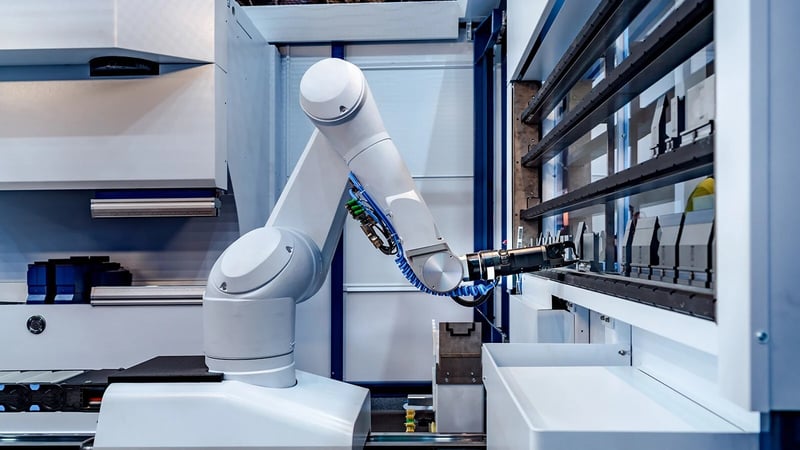
Growing volumes, more fragmented orders, new distribution channels and technologies introduced over time increase the complexity of warehouse operations. Inefficiencies emerge especially when processes, data and systems do not evolve at the same pace as the business: manual activities increase, visibility into flows decreases and maintaining consistent performance becomes more difficult.
Identifying these critical areas makes it possible to understand where action is needed and what level of digitalization or automation is actually required.
Picking errors and poor traceability
Picking is one of the processes most sensitive to operational inefficiencies. An incorrect pick can result in additional checks, rework, delays in order preparation and returns, with consequences extending beyond the warehouse itself.
Complexity increases as the number of SKUs and order lines grows. In warehouses handling many small orders, operators must perform more picks and movements while maintaining both speed and accuracy. Without adequate tools, operating times and the likelihood of errors increase.
Traceability adds another layer of complexity. If movements are not systematically recorded, locating an item, checking stock or tracing the source of an anomaly requires manual checks and takes time away from operational activities.
Manual processes and information not updated in real time
Excel, paper documents and operators' knowledge can support low-complexity processes. As the number of items, orders, locations and movements increases, however, information can become fragmented and difficult to update.
The issue is not only the time spent on manual activities. If the available data does not match the actual situation in the warehouse, decisions based on that data may also be wrong, from product availability to order planning.
Warehouse inventory management is a practical example. Misalignment between physical stock and recorded data can require checks and adjustments, slowing down operations.
|
Predominantly manual management |
Digital management |
|
Information distributed across documents and people |
Centralized information |
|
Manual updates |
Recording of operations |
|
Greater dependence on individual knowledge |
Structured and shared processes |
|
Checks performed after anomalies occur |
Greater visibility into activities |
|
Difficulty reconstructing movements |
Flow traceability |
Coordinate manual, automated and hybrid warehouses
Warehouse automation can solve specific bottlenecks, but it also introduces new coordination requirements. AGVs and AMRs, sorters, picking systems, stacker cranes and other technologies may come from different vendors and may have been implemented at different times.
The issue arises when these solutions operate as automation islands rather than as components of the same logistics process. A slowdown in one stage can propagate to subsequent ones, generating waiting times, congestion or unused capacity.
This situation is particularly common in brownfield warehouses, where new technologies must coexist with existing layouts, software and equipment. Integration capability therefore becomes a fundamental criterion when selecting automation solutions. In particular, introducing automation technologies into existing warehouses demonstrates how, with an innovative Smart Logistics approach, evolution can take place progressively, focusing on the most critical processes without necessarily redesigning the entire facility.
Integrate the warehouse with existing ERP and systems
The physical flow of goods and the flow of information must remain synchronized. When ERP, WMS, WCS and other corporate systems do not communicate correctly, duplication, inconsistent information and discrepancies can arise between what appears in the system and what is actually happening in the warehouse.
Complexity increases further in ecosystems that include production systems, automation and platforms introduced at different times. Simply connecting applications from a technical standpoint is not enough: roles, exchanged data and the rules governing interactions between the different systems must also be defined.
Manage demand peaks and fluctuations without losing efficiency
Seasonal peaks, promotional campaigns, eCommerce and omnichannel logistics can rapidly change the number, composition and priority of orders.
The challenge is not simply handling more volume, but absorbing greater variability while keeping accuracy and fulfillment times under control. Smaller and more fragmented orders, for example, can increase the number of picking missions and alter workloads even when the total quantity moved remains the same.
The problem becomes even more apparent across networks with multiple warehouses or channels. Distributed inventory, different product ranges and requests from different channels can create overstock, stock-outs and inefficiencies if a coordinated view is lacking.
For Logistics and Warehouse Managers, the ability to adapt operations to demand becomes a structural requirement: maintaining control, accuracy and service levels even when order volumes and characteristics change
How can you optimize warehouse operations without disruptions?
How Beta 80 enables intelligent warehouse management
Beta 80 has been operating in Warehouse Management for over 30 years and supports more than 200 active customers, with projects covering manual, automated and hybrid warehouses as well as Distribution Centers. Its experience combines process expertise, software development, system integration and automation, with implementations in Italy and internationally.
The approach starts with an analysis of the existing warehouse: processes, flows, data, layout, systems and technologies already installed. Based on this assessment, an architecture is defined that is consistent with operational objectives and capable of evolving over time, while avoiding the introduction of technology where it does not deliver a tangible benefit.
Digitalize and orchestrate warehouse processes
Receiving, storage, stock and inventory management, material handling, picking, order preparation and shipping are all part of the same operational flow. Beta 80 works on their digitalization and orchestration to keep the physical flow of goods aligned with the information flow.
The WMS thus becomes the governance layer for Operations: it records activities, updates information and provides visibility into stock and movements, supporting accuracy and traceability throughout the process.
The approach can be applied to different configurations, from manual warehouses and Distribution Centers to environments characterized by high levels of automation.
Optimize picking and operator activities
Errors, unnecessary movements and repetitive activities can have a significant impact on picking productivity. Technology should therefore be selected according to the process, volumes, layout and characteristics of the items being handled.
Beta 80 integrates different solutions to support operators, including Radio Frequency, Voice Picking, Pick to Light and Put to Light, as well as automated picking systems. There is no single configuration suitable for every warehouse: technologies can be adopted individually or combined to address specific areas of inefficiency.
The objective remains the one defined at the outset: increasing accuracy and productivity while keeping day-to-day operations simple and effective.
Discover our Case Studies
-
Case Study
Smart Packaging, Smarter Warehousing: the LDI case
Discover how Gruppo Logistico LDI integrated automated packaging with Beta 80's Stockager® WMS to streamline order processing, optimize packaging materials and improve warehouse efficiency.
-
Case Study
Warehouse automation in pharma: the Liomont case
Discover how Liomont integrated Beta 80's StockMatic WCS to coordinate complex warehouse processes, synchronize picking areas and improve the efficiency of pharmaceutical distribution.
-
Case Study

Smarter warehouse management: the Montello case
Discover how Montello adopted Beta 80's Stockager® WMS to improve coordination and control across goods handling, storage, picking and shipping operations.
-
Case Study
Optimizing warehouse flows: the Arbo case
Discover how Arbo adopted Beta 80's Stockager® WMS to optimize warehouse flows, improve operational visibility and enhance accuracy from goods receiving to shipping.
Integrate existing automation and technologies
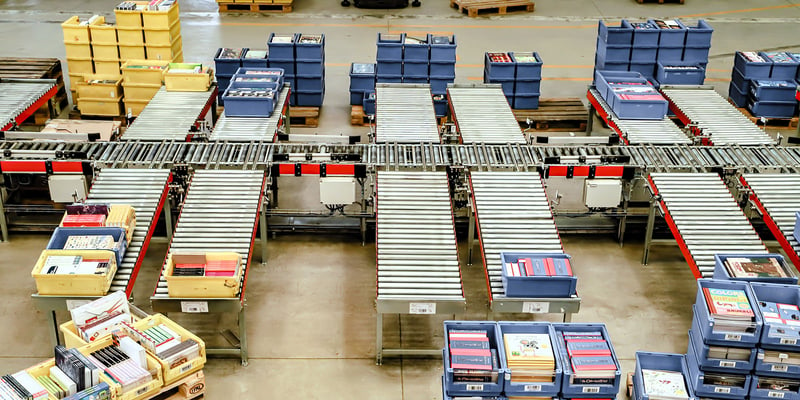
n evolving warehouse does not necessarily start from scratch. Equipment, software and automation may have been introduced at different times and may come from different vendors.
Beta 80 integrates Warehouse Management with heterogeneous automated systems, including miniloads, stacker cranes, shuttles, AGVs and AMRs, sorters, vertical warehouses, end-of-line systems and anthropomorphic robots. The WCS layer coordinates the execution of automation and connects it with the overall process governance provided by the WMS.
This also makes it possible to leverage existing technology investments and reduces the risk of creating uncoordinated automation islands.
Introduce micro-automation into brownfield warehouses with Smart Logistics
When the warehouse is already operational, increasing productivity and capacity does not necessarily require building a completely new automated facility.
Beta 80 Smart Logistics is a consulting and technology approach designed particularly for brownfield environments. It starts with an analysis of processes and operational data to identify bottlenecks and activities where targeted automation can generate value. Based on this analysis, modular and scalable micro-automation solutions are selected and integrated, ensuring compatibility with existing infrastructures and processes.
AMRs, goods-to-person systems, assisted picking, mini-sorters and other solutions can therefore be introduced progressively at critical points in the flow. The approach is vendor-free: technologies are selected according to process requirements and integrated through software within a coherent architecture.
This makes it possible to proceed step by step, distribute investments over time and preserve warehouse operational continuity. It is particularly suitable for organizations that need to innovate while retaining layouts, equipment and systems already in operation.
Coordinate manual, automated and hybrid environments
Beta 80 designs solutions for manual, automated and hybrid environments, coordinating operators' work with WMS, control systems and material-handling technologies. In hybrid environments in particular, integration makes it possible for manual activities and automation to coexist within the same flow, preventing them from evolving as separate processes.
This is the same principle behind Smart Logistics: automation is introduced where it generates value and managed as part of the overall process.
Integrate Warehouse Management with ERP and SAP
The WMS must fit into the company's IT ecosystem and exchange information with the systems that manage orders, purchasing, production and other business processes.
Beta 80 integrates its Warehouse Management solutions with customers' ERP systems and implements SAP Supply Chain Management projects on ECC 6.0 and S/4HANA, connecting the management layer with warehouse operations execution.
Integration makes it possible to clearly define which information is managed by the different systems and how it should be exchanged, keeping management data consistent with physical operations.
Evolve the warehouse without losing sight of operations
The evolution of Warehouse Management also includes everything that happens between the starting situation and the new operating model. Data migration, integration with existing systems and technologies, configuration, testing and go-live must be planned around the warehouse's day-to-day requirements.
This principle becomes even more important in brownfield projects. Beta 80's Smart Logistics approach follows a path that starts with process assessment, continues through design and technology selection, implementation and software integration, and reaches performance monitoring and the subsequent evolution of the solution.
The objective is to build a progressive path: address priority issues, measure the results and create an architecture that can be extended over time without losing control of Operations.
How to measure Warehouse Management results
There is no single KPI capable of measuring warehouse efficiency. Metrics should be selected according to the initial objectives and compared against a baseline established before the intervention.
-
Picking and order accuracy
Picking accuracy, error percentage and correctly fulfilled orders make it possible to assess the reliability of picking and order preparation activities. -
Inventory accuracy and stock availability
Inventory accuracy, inventory discrepancies and stock availability help assess the consistency between digital information and the physical situation in the warehouse. -
Speed and operational productivity
Average picking time, fulfillment time, throughput and the number of orders or lines processed per unit of time can be used to measure capacity and productivity. -
Inventory management efficiency
Inventory-related metrics should be defined according to the logistics model and business objectives. The goal is not to increase or reduce stock in absolute terms, but to have reliable information with which to manage it.
-
Picking and order accuracy
Picking accuracy, error rates, and the percentage of correctly fulfilled orders help assess the reliability of picking and order preparation operations.
-

Inventory accuracy and stock availability
Inventory accuracy, inventory discrepancies, and stock availability help assess how closely digital inventory records match the actual physical stock in the warehouse.
-

Operational speed and productivity
Average picking time, order fulfillment time, throughput, and the number of orders or order lines processed per unit of time help measure operational capacity and productivity.
-

Inventory management efficiency
Inventory-related metrics should be defined based on the logistics model and business objectives. The goal is not simply to increase or reduce stock levels, but to have reliable information to manage inventory effectively.
ROI and operational impact
The ROI of a Warehouse Management project should relate investments to measurable results: reductions in errors and times, increased productivity and the impact on operating costs.
For this reason, KPIs should be defined before implementation, establishing the starting situation, target and measurement period.
Request a free consultation
How much could your warehouse performance improve?
Every warehouse has room for improvement. Beta 80 experts help you identify inefficiencies, assess digitalization and automation opportunities, and define an optimization roadmap focused on measurable results and return on investment.

Warehouse Management for different industries and logistics models
Receiving, storage, inventory, picking and shipping are common processes across many warehouses. What changes are the priorities: synchronizing logistics and production in Manufacturing, ensuring traceability of medicines and food products, managing high volumes and stock availability in Retail.
A Warehouse Management project should therefore start from the specific processes and requirements of the industry, integrating WMS, corporate systems and automation according to the operational context.
Manufacturing: connect production, warehouse and automation
In Manufacturing, production and logistics are closely interdependent. Raw materials and components must be available when required by production lines, while semi-finished and finished products must be identified, moved and stored while keeping information up to date throughout the process.
The WMS therefore becomes a connection point between warehouse and factory. Integration with ERP, MRP and MES makes it possible to synchronize production requirements, material availability and logistics operations: the MES can communicate the materials and timing required by production, while the WMS organizes picking and movements and keeps inventory updated. Inbound and outbound checks can also be integrated into the process through labels, sensors, IoT devices and identification systems.
Complexity increases in plants combining manual, automated and hybrid warehouses. AGVs and AMRs, robots, sorters, picking systems and other automation must be coordinated to prevent individual technology islands from generating queues, downtime or bottlenecks. In these scenarios, the WCS orchestrates automation execution, while the WMS maintains overall governance of logistics processes. One useful indicator for assessing effectiveness is throughput, which can be measured, for example, by the number of order lines processed per unit of time. (WCS for Manufacturing: how to coordinate automation and maximize production)
Evolution does not necessarily require redesigning the warehouse from scratch. In brownfield environments, micro-automation solutions such as AMRs, Pick to Light, Voice Picking and identification systems can be introduced progressively where they generate the greatest value, integrating them with existing processes and technologies.
Pharma: traceability, batches and control of sensitive products
In Pharma, efficiency and speed must coexist with strict traceability and control requirements. Medicines, vaccines and other sensitive products require knowledge of origin and destination, batch and expiration-date management, and monitoring of storage conditions.
The WMS makes it possible to centralize this information and connect it to operational activities. It can manage batches and expiration dates, support FIFO logic, track movements and communicate with technologies such as RFID, Pick to Light and IoT sensors. The latter can, for example, monitor environmental parameters relevant to the cold chain, such as temperature and humidity. (Pharmaceutical logistics: innovations for managing medicines)
A concrete example is Gruppo Logistico LDI, cited by Beta 80 for managing flows and exchanging the information required for pharmaceutical product traceability.
Food & Beverage: trace products, batches and expiration dates throughout the supply chain
In Food & Beverage, traceability follows the product from raw materials through storage and distribution. A WMS makes it possible to associate items, batches and orders and digitally record movements, making information available throughout the logistics process.
Barcodes, QR codes and RFID make it possible to identify products and batches. The WMS records activities and can support expiration-date management and recall processes. In automated warehouses it coordinates operations with material-handling systems, while in manual warehouses it can guide operators and record confirmations throughout the different activities.
Traceability is also a regulatory requirement: Regulation (EC) No 178/2002 establishes the general principles of European food law and requires the traceability of food, feed and substances intended to form part of them throughout production, processing and distribution. (European Commission – General Food Law)
Retail and Large-Scale Distribution: manage inventory and Distribution Center flows
In Retail, particularly in Large-Scale Distribution, the Distribution Center must coordinate a continuous flow of goods from suppliers to stores. Stock availability, picking speed, traceability and the ability to handle peaks and fluctuations in demand directly affect service levels.
The Distribution Center concentrates receiving, storage, preparation and shipping activities. Digitalizing these processes provides greater visibility into flows and makes it possible to coordinate processes involving the warehouse, yard and transport. According to a 2026 Beta 80 article, more than 70% of Italian large-scale retail players had already launched logistics digitalization projects, with a particular focus on automation, robotics and flow analysis. The figure is attributed to the Contract Logistics “Gino Marchet” Observatory of Politecnico di Milano
Warehouse Management can support the entire process, from checking incoming goods to picking and shipment preparation. The yard also becomes part of the flow: synchronizing order preparation with vehicle arrivals at loading bays and knowing in advance what resources will be required for receiving can prevent inefficiencies outside the warehouse from slowing down the entire Distribution Center.
Our services
Beta 80 solutions for Warehouse Management
Beta 80 combines system integration and automation expertise with proprietary solutions for warehouse management and control.
-
Stockager® Suite
Stockager® Suite is Beta 80's proprietary Warehouse Management platform, available on premise and in the cloud. It includes StockMan and StockMatic and can be extended through modules dedicated to specific operational requirements.
-
StockMan – Warehouse Management System
StockMan is Beta 80's WMS for managing and orchestrating warehouse processes.
-
StockMatic – Warehouse Control System
StockMatic is Beta 80's WCS for coordinating and controlling automation systems in automated and semi-automated warehouses.
-
Smart Logistics
Beta 80's Smart Logistics solution optimizes existing warehouses through modular, scalable micro-automation, improving efficiency without disrupting operations
-
SAP Supply Chain
For companies using SAP, Beta 80 implements and integrates warehouse management systems on SAP platforms.
Talk to an expert
Improve your warehouse management
Every warehouse has a different starting point: manual processes to digitalize, systems to integrate, automation to coordinate or new volumes to manage.
Talk to Beta 80's experts to assess your existing environment and identify the Warehouse Management path that best fits your needs.

How long does it take to implement a WMS such as Stockager Suite, from contract signing to go-live?
There is no standard timeframe that applies to every project. Timing and activities depend on warehouse complexity, the number of processes involved, integrations with ERP and other systems, the level of automation, data migration and the testing required before go-live.
For this reason, the timeline should be defined after analyzing the operational and technological context.
Is a cloud or on-premise WMS more suitable if my company already uses SAP ERP?
The presence of SAP alone does not determine the choice between cloud and on premise. The IT architecture, integration requirements, existing infrastructure, operating model and corporate policies must all be assessed.
Beta 80 works with both on-premise and cloud Warehouse Management solutions, as well as SAP Supply Chain projects.
What happens to warehouse data and operations during migration?
It depends on the project and the starting architecture. Migration requires an analysis of the data to be transferred, integrations and the activities required to transition to the new system.
Testing and the go-live plan should therefore be designed around the operational requirements of the individual warehouse.
Which KPIs should I monitor to measure the ROI of a WMS during the first 6 months?
KPIs depend on the objectives of the project. Metrics to consider include picking accuracy, inventory accuracy, error percentage, average picking time, fulfillment time, throughput and productivity.
It is important to establish a baseline before implementation: without initial data, changes observed after the project cannot be correctly attributed to it.
What is the difference between an ERP warehouse module and a dedicated WMS?
ERP and WMS have different roles. ERP governs the company's management processes; a WMS is specifically designed to organize and execute warehouse operations.
The need for a dedicated WMS therefore depends on process complexity, volumes, traceability requirements, existing automation and the level of control required.
Do I need a different WMS for a Pharma warehouse compared with Food & Beverage or Retail?
The core functions of a WMS may be common, but configuration, processes and integrations must address the specific requirements of each industry.
Traceability, product characteristics, flow structure, volumes, distribution channels and automation can vary significantly. The choice should therefore start from the requirements of the individual warehouse rather than simply from its industry label.